
There is a story you have probably heard about an elephant.
A baby elephant is tied to a small stake with a thin rope. It pulls and pulls and cannot get free. Years later it weighs as much as a truck, and it is still tied to the same small stake with the same thin rope, and it never pulls again.
Nobody quite knows where the story comes from. It is told in sermons, in business seminars, on the backs of motivational posters. It may not be true of any real elephant.
We keep telling it anyway, because something in us recognises the rope.
Where did we get the idea that giving up is learned?
In 1967, two young psychologists named Martin Seligman and Steven Maier published an experiment that is hard to read now.
Dogs were placed in a harness and given electric shocks. Some of the dogs could stop the shock by pressing a panel with their head. Others received exactly the same shocks, but nothing they did made any difference.
Later, all of the dogs were placed in a box divided by a low barrier. A shock came through the floor, and the only thing a dog had to do was step over the barrier to the other side.
The dogs who had been able to stop the shocks before learned to jump quickly. Many of the dogs who had not been able to stop them lay down and took it. The way out was right there, low enough to step across, and they did not try.
Seligman and Maier called it learned helplessness. The idea travelled far beyond the laboratory. It became a way of explaining depression, poverty, classrooms, marriages. The lesson seemed clear. Defeat teaches you to stop. Enough defeat, and you stop for good.
It is a sad story. It is also a tidy one, and tidy stories deserve a second look.
What happens when the scientists turn their own coin over?
Almost fifty years later, in 2016, Maier and Seligman published a paper looking back at everything neuroscience had since learned about their original finding.
Their conclusion was that they had it backwards.
Passivity in the face of prolonged pain, they wrote, is not learned. It is the default. It is what a nervous system does automatically when something bad keeps happening and does not stop. Deep in the brainstem, a small cluster of cells helps drive that passive response on its own, without being taught.
What is learned is the other thing. When an animal discovers that its actions change what happens to it, a region at the front of the brain detects that control and quiets the shutdown. And that discovery tends to stay, protecting the animal the next time something goes wrong.
Read that slowly, because it rearranges the whole picture.
The old story said: the world teaches you to give up. The new one says: giving up is where you start, and the world, if you are lucky, teaches you that you can act.
The dogs who lay down in the box had not learned helplessness in the way the original theory proposed. What they had failed to learn was its opposite: control.
What if the cage is the default, and the key is the lesson?
Now bring it closer to home.
Think of the things you do not try. The conversation you rehearse and never start. The work you describe as not for people like you. The body you have decided will always be tired. The door you walked past so many times that it stopped looking like a door and started looking like a wall.
The comfortable belief is that you learned these limits. Somebody said no enough times, and you believed them.
Some of that is surely true. But the 2016 paper suggests a harder possibility. Perhaps nobody had to teach you the wall. Perhaps, after enough things have happened that you could not control, the wall is simply what a person feels when they have not yet had enough experience of their own effort changing something. Not a lesson you absorbed, but a lesson you never received.
That is a strange kind of relief. A cage you were put in feels like somebody else's crime. A cage that is the default feels like weather. But weather is not destiny.
Is hope just another word for evidence?
Something else happened in these experiments that may be more important than helplessness itself.
Animals that had previously learned they could control an aversive event were sometimes protected later, even when the next event could not be controlled. The earlier experience had left something behind.
Not a slogan. Evidence.
They had acted, and the world had answered.
Decades later, Maier and Seligman would describe the neural machinery that may help explain why that experience lasts. The brain does not merely detect control in the moment. Previous control can change how a later stressor is met. Near the end of their 2016 paper, they cautiously give that circuitry a remarkable name: the “hope circuit.”
Hope, in that sense, is not believing everything will work out.
It is having evidence that what you do can matter.
Now turn the coin, gently.
One face: this is biology and nothing more. Brains are wired to conserve energy when effort is useless, and to spend it when effort pays. Hope is just that accounting, running in the background. There is no mystery here, only a very old survival rule.
The other face: if the cage is the default and the key is a single experience of mattering, then the most important thing that can happen to a person may be small. One door that opens. One time the effort counts, and the world answers, and something in you keeps that answer for the next hard thing.
You do not have to choose a face. Both may be true at once.
Which rope are you still tied to?
The Keys do not tell you what is true. They hand you the coin and ask you to feel its weight.
I have spent long stretches of my life lying down in a box with a low barrier. I called it realism. I called it being mature about what is possible. Some of it was wisdom. And some of it, I wonder now, was something simpler: I had not yet collected enough evidence that moving could change what happened next.
What changed was never a big revelation. It was small evidence. One time I tried the door and it opened. Then another. The front of the mind learns slowly, and it learns from proof, not from posters.
This is part of what the book means by remembering. Not learning something new, but finding out that the shutdown was never the truth about you. It was only where you started.
So here is the question to carry into this week, into the next conversation you have been avoiding, into the next room you have already decided is not for you:
What is the smallest door you could try, just to find out whether it was ever locked?
If this piece moved something, the beginning of the book is free.
The Keys do not tell you what is true.
They show you the faces.
— Intro to the Keys: The Coin
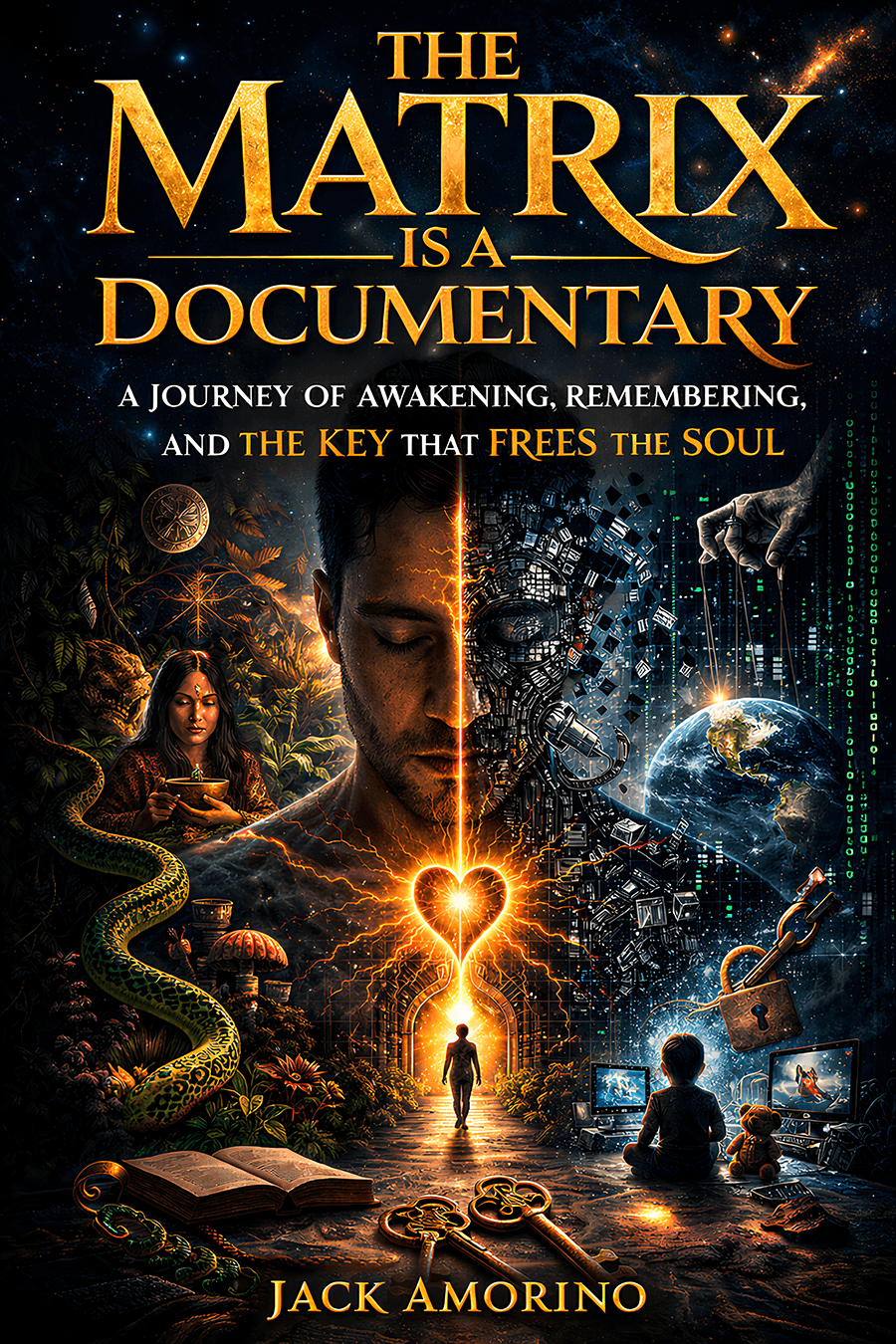
The Keys run deeper in the book: twenty-seven of them, in three Cycles, left behind for those ready to go further.


