
There is a moment you have probably lived through many times without noticing it.
A room. A question. Everyone answers before you do. And somewhere between hearing their answer and saying yours, something small changes its mind.
Not your eyes. Something just behind them.
In the early 1950s, a psychologist named Solomon Asch built a room designed to catch that moment in the act.
What would you say if everyone else saw a different line?
The setup was almost insultingly simple. A small group of students sat around a table. On one card was a single vertical line. On a second card were three more lines, labelled. The task was to say out loud which of the three matched the first.
The answer was obvious. Alone, people almost never got it wrong.
But only one person at that table was really being tested. The others were working with Asch, and on certain rounds they had been told to give the same wrong answer, calmly, one after another. The real participant sat near the end of the row. By the time his turn came, he had heard the whole room agree on a line his own eyes told him was false.
Across the critical rounds, roughly a third of participants' answers went with the group. Most participants went along at least once. About a quarter never did.
Read those numbers twice. They are kind in one direction and unsettling in the other.
Where does the cage actually stand?
It is tempting to picture conformity as a weakness belonging to other people. The crowd. The flock. Not you.
But listen to how the participants described it afterward, as Asch reported their interviews. Some said they knew the group was wrong and simply did not want to stand out. Some began to doubt themselves, wondering whether they had misunderstood the task, or whether their own judgment could be trusted. And a few appeared to accept the group's judgment over their own.
The second group is the one I cannot stop thinking about. They did not exactly lie. They quietly began to distrust what they saw, so that they would not have to be alone with it.
This is what the book means by an inner cage. No bars. No guard. Only the soft, constant pressure of a room, and a self that would rather revise its perception than risk its belonging.
The real prison isn't made of walls. It's built from beliefs you never tested. And some of those beliefs were never even yours. They were simply the answer the room gave before your turn came.
What changes when one other voice breaks the spell?
Here is the part of the story that usually gets left out.
Asch ran variations. In one, a single other person at the table gave the correct answer. Just one ally against the majority.
The going along dropped sharply.
The spell, it turned out, did not need to be broken by heroic courage. It needed a crack. One other person saying, out loud, I see it too.
So the room is strong, but it is not solid. It is made of agreement, and agreement is fragile in a way that walls are not. Take away its unanimity, and much of its weight goes with it.
Is going along always a betrayal of yourself?
Turn the coin.
One face: the experiment is a mirror held up to a species that will doubt its own eyes to keep its seat at the table. Every family secret kept by everyone at once, every office where nobody says the obvious thing, every belief that survives only because no one wants to be first to question it, lives in that gap between seeing and saying.
The other face: trusting the room is not foolish. For most of human history, the group usually knew something you did not. Where the water was. Which berries made you sick. Which path the storm took last year. When everyone around you points one way, listening is often wisdom, not weakness. And the same numbers that unsettle us also say something hopeful: even under that pressure, most of the answers people gave were still the true ones.
Both faces may be true at once. The instinct that kept our ancestors alive is the same instinct that can talk you out of what you plainly see. The question is not whether to trust the room. It is whether you can still tell the room's voice apart from your own.
Which line have you stopped saying out loud?
The Keys do not tell you what is true. They show you the faces. Your task is to feel the coin in your hand.
I remember a catechism class when I was a boy. I asked a question that made the room go very still. I remember the stillness more clearly than the answer. For years afterward, I think I listened for the room before I spoke, measuring what was allowed before I said what I saw.
Maybe you carry a moment like that too. A line you once saw clearly. A sense that something in your work, your family, your faith or your life was not the length everyone said it was. And a quiet, reasonable voice that answered: everyone else sees it differently, so perhaps you are the one who is mistaken.
Perhaps you are. That is the honest part. The room is sometimes right.
But the experiment leaves one small, stubborn gift. It takes only one voice to crack a unanimous room. Sometimes that voice is a stranger at the table. Sometimes it is a page you did not expect to recognise yourself in. And sometimes it is you, saying out loud, even just to yourself, what your eyes already told you.
This is part of what the book means by remembering. Not learning to see something new. Learning to stop apologising for what you already saw.
So here is a question to carry into this week, into the next room where everyone answers before you:
What do you still see clearly, that you have stopped saying, because the room answered first?
If this piece moved something, the beginning of the book is free.
The Keys do not tell you what is true.
They show you the faces.
— Intro to the Keys: The Coin
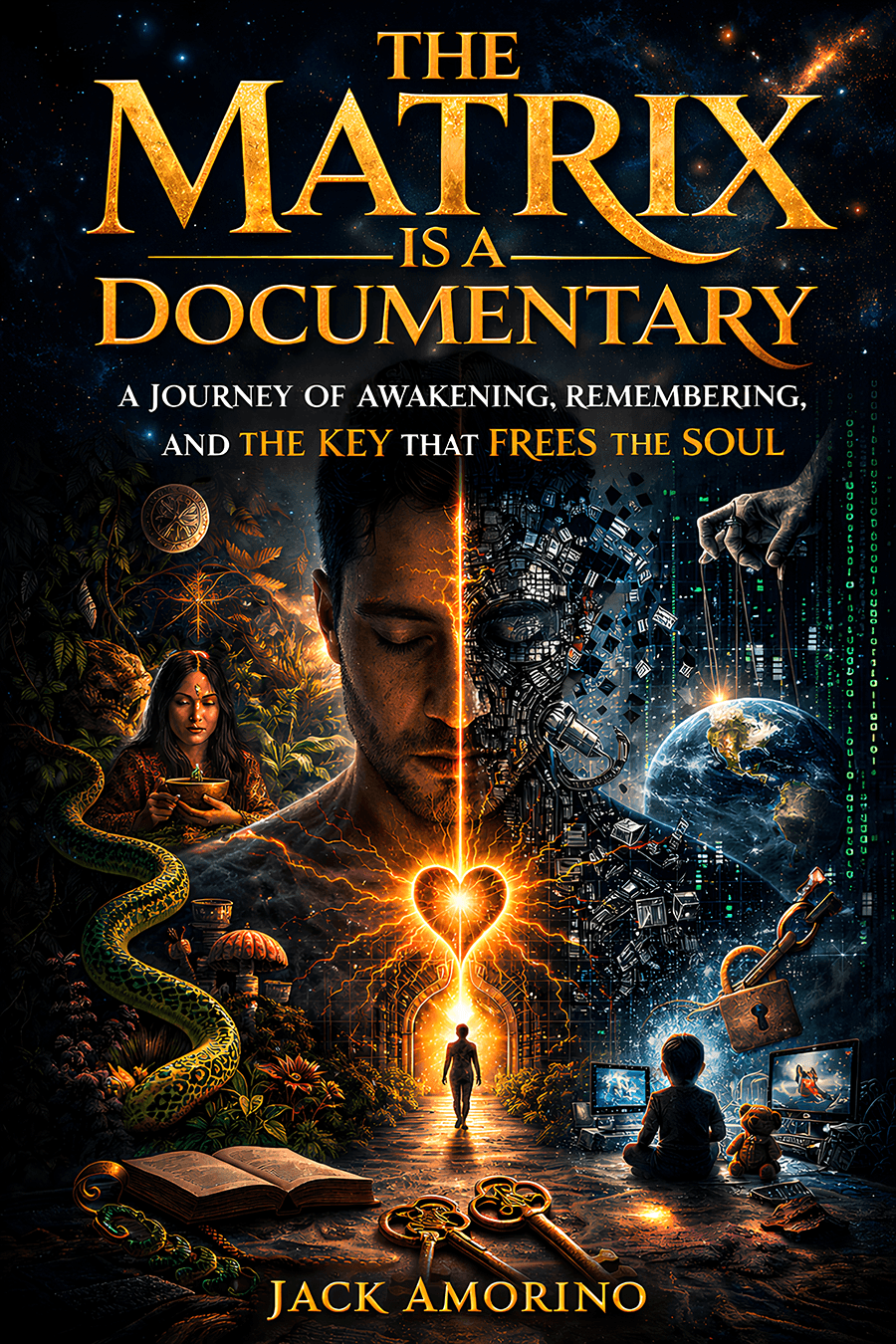
The Keys run deeper in the book: twenty-seven of them, in three Cycles, left behind for those ready to go further.


